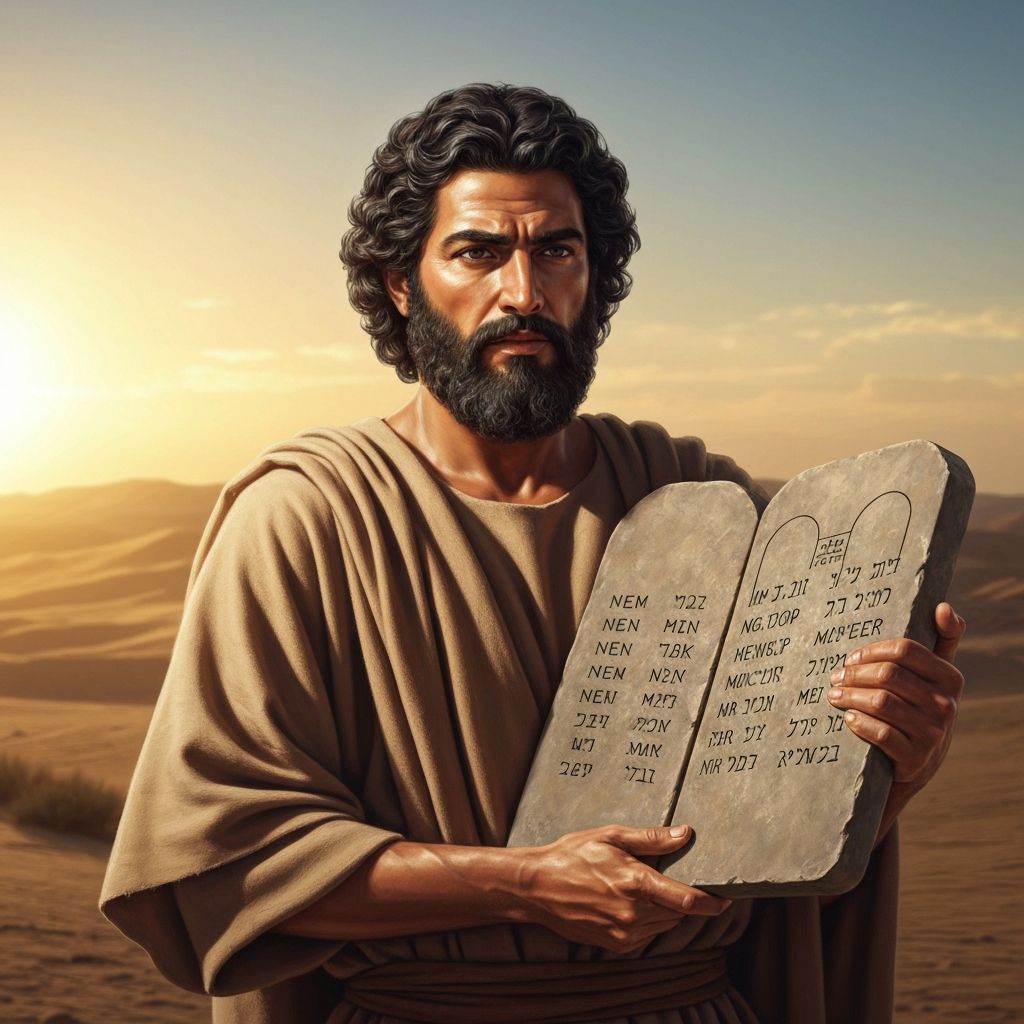
Moses
Prophet and LawgiverLeader who freed the Israelites from Egyptian slavery and received the Ten Commandments
Moses is one of the most important figures in the Bible. He led the Israelites out of Egypt, received the Law from God on Mount Sinai, and guided the people through 40 years in the wilderness.
Original Name
מֹשֶׁה (Mosheh)
Meaning
Drawn out
Etymology
From the Hebrew verb 'mashah' meaning 'to draw out', referring to Moses being drawn from the Nile
Linguistic Insights
The name Moses reflects a profound theological truth embedded in language. When Pharaoh's daughter named him 'Mosheh,' she used a Hebrew word meaning 'drawn out' - creating a permanent reminder that Moses was drawn from the water to later draw Israel out of Egypt. This wordplay demonstrates how biblical names often carry prophetic significance. The Egyptian context of his upbringing versus the Hebrew meaning of his name symbolizes Moses's dual identity as both Egyptian prince and Hebrew deliverer. Understanding this linguistic theology helps us grasp how God's word literally reshapes identity.
Translation Notes
- •The Egyptian connection: Some scholars note possible Egyptian influences like 'mose' meaning 'son' or 'born'
- •The active vs. passive debate: Whether Moses is 'the one drawn out' or 'the one who draws out'
- •Pronunciation variations: Mosheh (Hebrew), Mouses (Greek), Moses (English)
Related Terms
Exodus 3:4
"When the LORD saw that he had gone over to look, God called to him from within the bush, 'Moses! Moses!'"
Exodus 20:1
"And God spoke all these words: 'I am the LORD your God, who brought you out of Egypt.'"
Deuteronomy 34:10
"Since then, no prophet has risen in Israel like Moses, whom the LORD knew face to face."
Born
c. 1391 BC
Died
c. 1271 BC
Lifespan
120 years
Father
Amram
Mother
Jochebed
Spouse
Zipporah
Children